The Smallest Possible Writing Practice
How noticing and recording the little places your attention goes can make you a writer over time
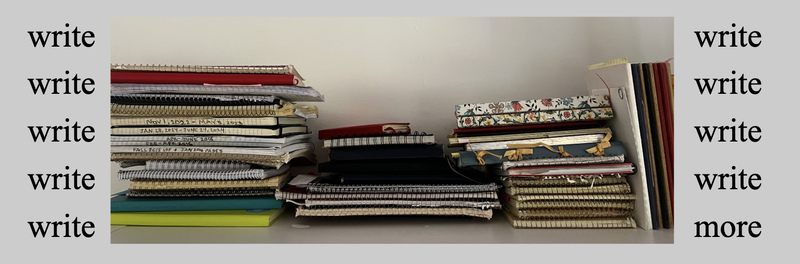

Let’s build a habit that stays! wrote the Fika team in their blog post announcing the 4-Week Writing Challenge that introduced many of us to the platform. And looking at the best-of posts from Week 1 and Week 2/3, it’s obvious that while new bloggers in 2025 come from different backgrounds and write about different things, we share one desire: to write more. To build a writing habit.
For a lot of people, writing is like exercise, or eating better. An intention they carry around like a smooth stone in their pocket. Maybe they used to journal and stopped. Maybe people keep telling them, You should write about that. Or maybe they’re just curious to be in dialogue with their own thoughts instead of scrolling through life consuming what other people think.
We all have goals we return to again and again. Writing is one of them.
But it turns out there are a lot of ways to get stuck when you’re trying to write, and building a habit that stays can feel harder than convincing a toddler to put their shoes on mid-tantrum. You tell yourself to focus, turn off notifications, just focus. Then, finally, you do—only to end up staring at a blank page, doubting yourself, unsure where to begin.
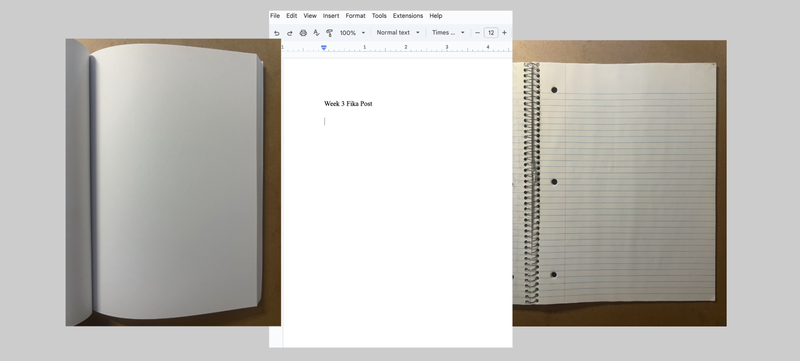
I am here to tell you another way to start writing. A method so simple that if you already do some version of it, you may not even realize it’s a method. And if you don’t, you’ll find it the simplest thing in the world to begin.
Step 1. Notice Where Your Attention Goes
To build a writing habit, you need to cultivate a noticing habit. You need to notice when something sparks a thought in your mind that stands out. To be aware when an article you read reminds you of something else you read last week. To notice when a smell brings you back to your first job; or a song to your first love.
Notice things, and value that noticing as something unique to you. Specific to you as a person.
In the noisy world we live in, it’s really easy to let things blur together. To let your attention jump from one thing to the next. But if you want to write, the road to having a unique voice is paved with noticings—small stones of lived experience that become the foundation of your writing voice.
American writer Pam Houston calls them glimmers. Ethnographers call them jottings. They’re tiny, often goal-less moments of awareness that say: Something about this feels different. Pay attention.
For instance, I am a person who notices color.
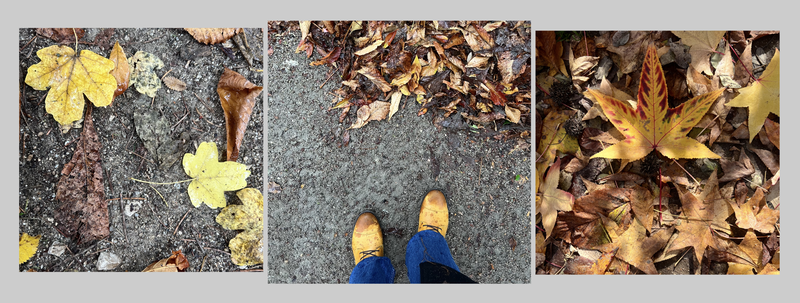
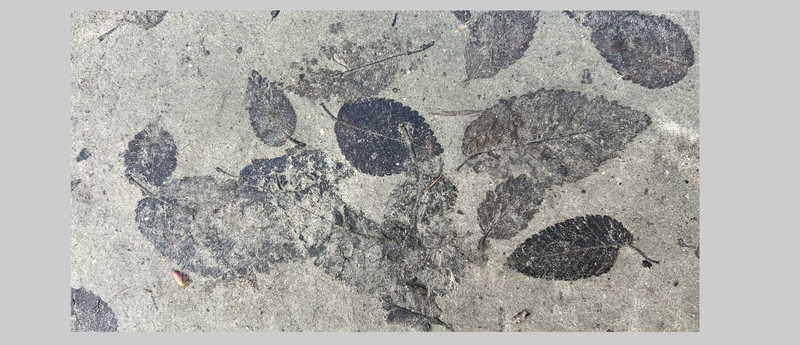
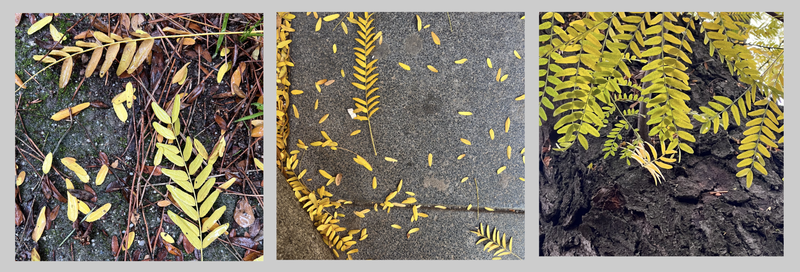
My insides sing at the way fall leaves paint the world with yellow. I notice how the gingko trees all turn in a uniform splash as if they’d been dunked in yellow paint while the elms are a patchwork of green and gold as they turn slowly. All the sunshine is in the trees and in piles along the ground this time of year, I jotted down recently while out walking on a gray November day.
Which brings me to the other half of the practice.
Step 2. Record Your Noticings
Writing them down is what turns random noticings into material for writing.
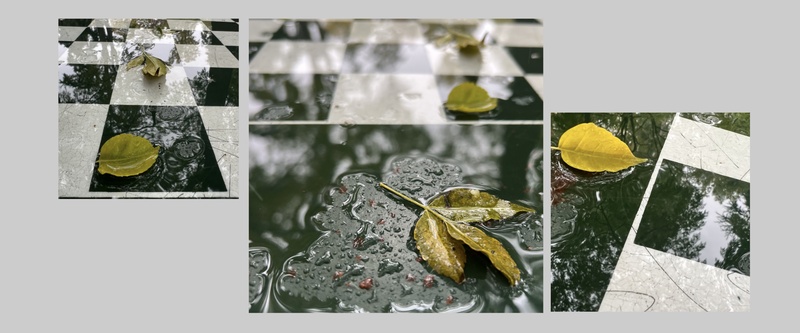
Where you capture them doesn’t matter as long as you can a) keep it with you at all times and b) easily return to it later. I’ve kept notebooks much of my adult life, and I always carry one in my purse. But my noticing habit only turned into a more consistent writing habit when I started using the Notes app on my phone, and taking photos related to the noticings.
You might record voice notes to yourself. Text yourself in WhatsApp as a design friend does. Or write by hand on index cards you carry in your pocket the way Austin Kleon and Anne Lamott do. In my experience, worrying too much about finding the right method can derail the practice. Instead, let yourself simply try something for a week. If it doesn’t work for you, try something else.
The point is to start noticing what you notice, and to capture it in a consistent place.

A Story: One Word Can Be a Practice
Once upon a time a woman with three young kids and a demanding job took a writing class. She wrote for 15 minutes a day for two months, even extending the practice with classmates afterward. She was finally writing consistently the way she’d long wanted to do. She felt more alive than she had in a long time.
But when the group ended and the holidays arrived, she stopped writing.
On New Year’s Eve, while cooking dinner with a writer friend, she confessed how impossible it felt to keep writing amid the fullness of her life.
What if you start small? Her friend said. A writer they both admired had been blocked during Covid and gave herself permission to write one word a day and call it a writing practice. What if you try that?
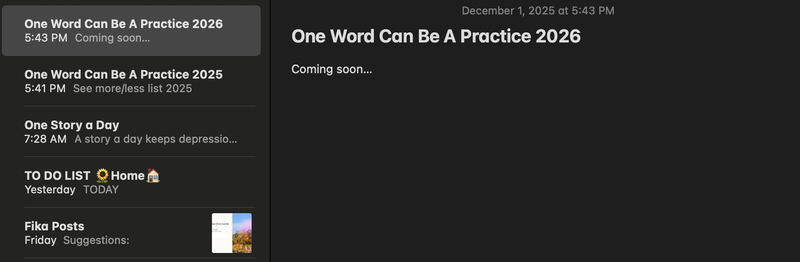
The idea seemed so beautifully simple. Why not? the woman thought. She opened a new Note in her phone and called it One Word Can Be A Practice. The next day, January 1, 2022, she listed her New Year’s intentions in the Note, starting with 1. Write at least one word a day.
That woman was me, and that was nearly four years ago. I quickly found I couldn’t write just one word because my brain always wants to finish the thought. But promising myself it could be just one word made possible to keep writing, no matter how life-y life got.
Amazingly, when I moved the Note into a Google Doc at the end of 2022, I discovered I’d written 40,763 words. An average of 111 words a day. And every year since then I’ve written more. The One Word Note for 2025 already surpasses 75,000 words—487 of which include the initial idea for this post.
Try Living in the World as a Person Who Writes
Are you someone who loves gardens? Takes pictures of flowers? Stops to pet every dog you pass? Or are you someone who obsesses about politics? Watches the news religiously? When you’re at a party, what stands out to you? When you flop down on the couch at the end of the day and zone out watching Instagram reels, what makes you laugh the most? Or are you a person who scrolls and feels nothing but anger?
To write, you have to notice what you notice. To believe that the experience you’re having is unique AND universal. That what you notice and think about can have meaning not only to you, but to the broader culture you’re a part of.
Choose a tool.
Start small.
Be consistent.
If you’re like me, it won’t feel like much at first, and you might even feel silly stopping to note things down. But over time you will find that one word—one noticing—at a time can become a way to live in the world as a person who writes. Otherwise known as building a writing habit that stays.
Hello 👋🏻 I’m Willow, and I write on Fika because I like their vision of building a new kind of place online to read and write with real humans. All photos are my own unless otherwise noted.