Resisting a Future of "Write-Nots"
Why the Identity of Writer Needs to be for Everyone

Why write at all, when we can use AI to write texts that make sense and may even make us sound smarter than we feel?
Last year, the entrepreneur, investor and writer Paul Graham proposed that thanks to AI, we are heading for a world where fewer people write. In a blog post titled Writes and Write-Nots, Graham argued that writing skills have always fallen on a spectrum from good writers to ok ones to people who can’t write. Being an ok writer used to mean facing the pressure and muddling through until you get better. But AI now makes it possible for ok writers not to have to try at all.
As a result, Graham continues, in the future, instead of good writers, ok writers, and people who can’t write, there will just be good writers and people who can’t write.
What’s the problem? you might ask. Haven’t we always had plenty of people who don’t write? Who cares if we don’t have ok writers anymore?
The problem, Graham argues, is that to do certain kinds of thinking, we must write. A world of ok writers outsourcing their writing to AI is a world of people outsourcing their thinking too, making a world with thinks and think-nots. Graham’s blog post finishes:
This situation is not unprecedented. In preindustrial times most people's jobs made them strong. Now if you want to be strong, you work out. So there are still strong people, but only those who choose to be.
It will be the same with writing. There will still be smart people, but only those who choose to be.
But who will choose to write? And why?
I am a person who chooses to write. I have written regularly for over 15 years and although I have written over 500,000 words in stories, essays, blog posts and an unfinished memoir, I’ve published little and only recently grew comfortable calling myself a writer.
This isn’t uncommon. Even people who’ve published many books struggle with claiming the identity of writer. As poet Maggie Smith wrote in her own blog post about writing titled “What do you do?” this self doubt, or imposter syndrome, leaves a kind of stain that’s hard to scrub out.
The antidote? To write regularly. People who garden are gardeners. People who bake are bakers. People who read are readers. People who write are writers. Global creativity maven Julia Cameron echoes this same point in this passage from her book The Right to Write, reflecting on how the act of writing is what makes a writer:
'Did you write today?'
'Yes.'
'Then you’re a writer today.'
It would be lovely if being a writer were a permanent state that we could attain. It’s not, or if it is, the permanence comes posthumously.
A page at a time, a day at a time, is the way we must live our writing lives. Credibility lies in the act of writing. That is where the dignity is. That is where the final ‘credit’ must come from.
How many writers do you know? What about people who journal or blog or write on social media but don’t consider themselves real writers?
I know many. I was that person myself for years.
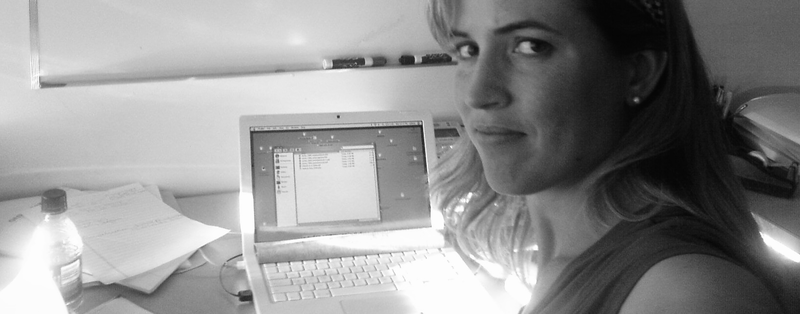
Throwback to 2007 when I was starting to figure out I was a creative writer not an academic one. Look at that old Mac (and that baby face)!
Working out and being physically stronger has proven health benefits. Even though, as Graham points out, most peoples’ jobs don’t make them stronger anymore, the majority of us understand that exercise makes us healthier.
What many people don’t realize: research has also shown that writing contributes to better health. Journaling just 15 minutes per day leads to fewer visits to the doctor over time, and better mental health outcomes. Multiple studies have shown this since the 1980s.
So writing isn’t just good for our thinking. It’s good for our mental and physical health. Would more people write if they understood its health benefits? What barriers exist to getting started?
I believe the way we define “writer” poses a barrier to getting more people writing. To make a world where more people write—and therefore, as Graham argues, more people think—we need to make more space in the identity of writer. It needs to be as easy to claim the identity of writer as it is to claim the identity of gardener. I plant lettuce and flowers in pots on my balcony, therefore I’m a gardener. I write in my journal, therefore I am a writer. I blog, therefore I am a writer. I have essays or stories in progress, therefore I am a writer.
What do you think? Do you feel comfortable claiming the identity of writer? Why or why not?
Hello 👋🏻 I’m Willow, and I write on Fika because I like their vision of building a new kind of place online to read and write with real humans. All photos are my own unless otherwise noted.